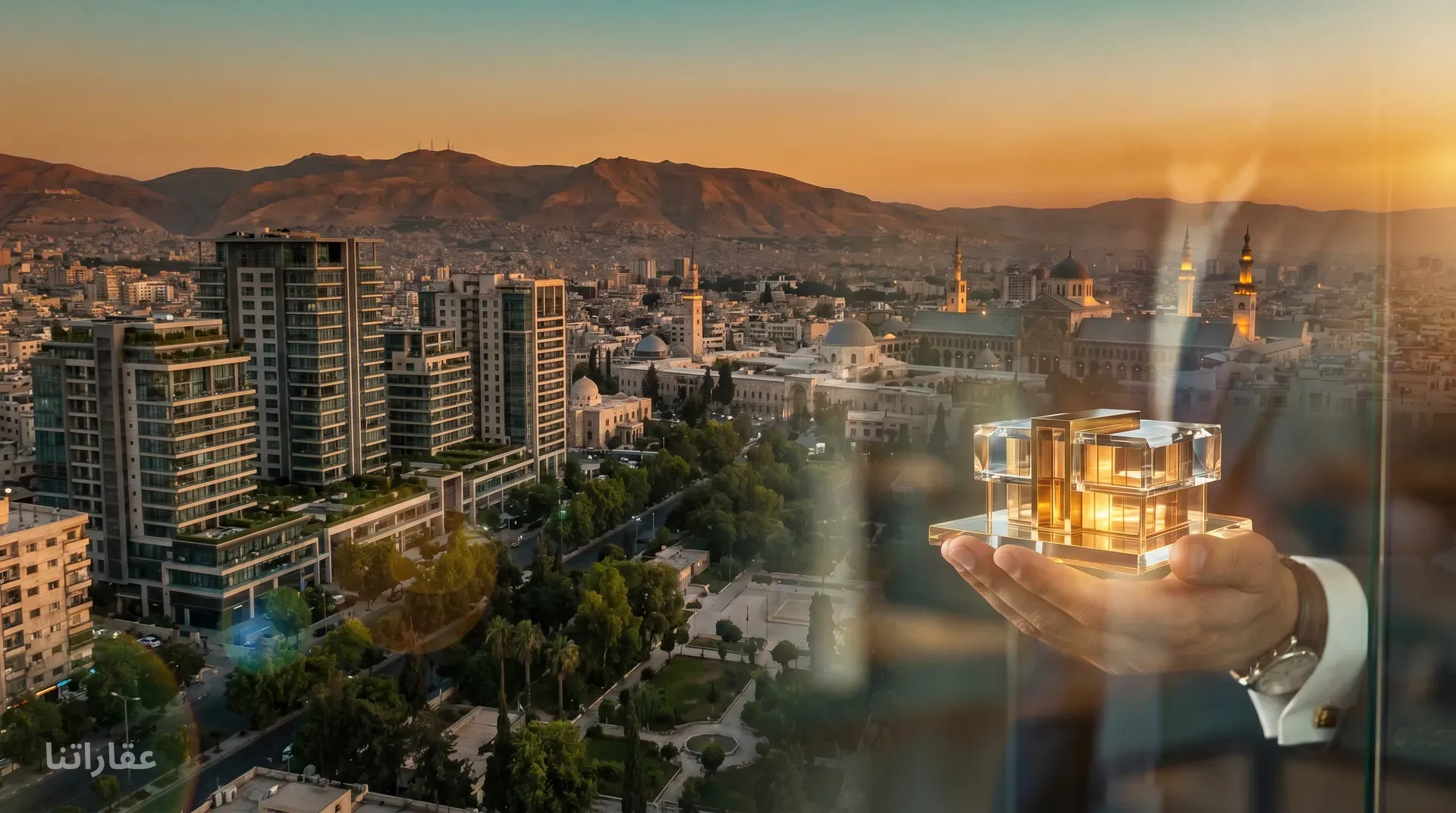
The Syrian real estate market has undergone a historic transformation in 2026. With over three million Syrians returning home, foreign investment doors opening wide, and the lifting of the Caesar Act that previously restricted international financial transactions, buying property in Syria has become a realistic and serious option for families, investors, and expats alike.
However, this market carries legal and procedural complexities that cannot be ignored. Deed types vary in legal strength, registration procedures require careful understanding, and transfer fees differ by property type and location. This comprehensive guide from AqarAtana is designed to be your most trusted reference before making any purchase decision.
Understanding the Syrian Real Estate Market in 2026
The Big Picture: A Market in Reconstruction
The Syrian real estate market is experiencing an unprecedented transformation. Rising demand for housing in major cities like Damascus, Aleppo, Latakia, and Tartus, paired with a clear shortage of ready residential units, has driven both rental and purchase prices noticeably upward in recent months.
Meanwhile, the Syrian government has announced a reconstruction vision through 2040, with major infrastructure projects already underway. All of this makes 2026 a strategic entry point for buyers who can act with intelligence and sufficient legal awareness.
Key Market Opportunities
- Prices remain below pre-2011 levels in many areas, with consistent upward projections
- Reconstruction zones offer high returns on medium and long-term investment
- The 2025 Investment Law allows 100% foreign ownership without a local partner
- Lifting of the Caesar Act reopens international banking channels
Types of Property Deeds in Syria
Before taking any purchasing step, you must understand exactly what type of ownership you will receive. In Syria, property deeds vary significantly in legal strength.
1. Green Tabu (Official Title Deed) — Strongest Legal Protection
The Green Tabu is the official property deed issued by the Land Registry Office. It represents the highest level of legal protection for the owner and is virtually unchallengeable in court.
- Absolute legal protection
- Easy proof of ownership before any official body
- Allows full property disposition: sale, gifting, and mortgaging
- Highest market demand and therefore highest price
2. Court Ruling Ownership — Medium Strength
When a property is not registered in the official Land Registry, many owners establish ownership through a final court ruling. This gives the holder legal ownership rights, but is less robust than the Green Tabu and requires additional steps for official registration.
Advantages: Resolves unregistered property issues, generally lower priced, and legally recognized.
Cautions: Does not replace official registration, may face future disputes, and requires careful legal documentation.
3. Private Sale Contract (Customary Contract) — Higher Risk
The customary contract, notarized by a public notary, is common in the Syrian market. It establishes the agreement between parties and gives the buyer physical possession, but does not match the Green Tabu in legal strength.
4. Shared Ownership (Co-ownership)
In some properties, shares are sold to multiple owners. This is common in inherited or commercial partnership properties. It requires extra caution and confirmation that all co-owners consent to the sale.
Deed Types Comparison
| Deed Type | Legal Strength | Market Liquidity | Risk Level |
|---|---|---|---|
| Green Tabu | ★★★★★ | High | Low |
| Court Ruling | ★★★★ | Medium | Medium |
| Customary Contract | ★★★ | Low | High |
| Shared Ownership | ★★★ | Medium | Requires scrutiny |
How to Buy Property in Syria — Step-by-Step Guide 2026
A step-by-step guide to purchasing your property in Syria through the legally approved procedures in 2026.
Identify the Property and Conduct a Site Visit
Define the type of property you need, visit it in person, and verify essential services (electricity, water, internet, roads) and location suitability. Never rely on photos alone.
Obtain the Land Registry Extract
Request the official Land Registry extract (Tabu record). It confirms the legal owner, property description, and any liens or mortgages. Do not proceed without this document.
Comprehensive Legal Due Diligence
Engage a real estate lawyer to verify the original plan at the Land Registry, tax records at the Finance Department, court dispute history, seller identity, and a structural engineering inspection.
Negotiate and Sign a Preliminary Sale Contract
Ensure the contract includes a detailed property description, price and payment terms, warranty clauses, penalty provisions, and agreed timelines. The contract is notarized by a public notary.
Obtain Tax Clearance Certificate
Obtain a tax clearance certificate from the Finance Department confirming the property is free from outstanding taxes or government fees. This is mandatory for completing the ownership transfer.
Register the Contract at the Land Registry
The core of the entire process — the official recognition of ownership transfer. Both parties (or their legal representatives) must be present with all required documents. Processing time: 3 days to one week under normal circumstances.
Taxes and Ownership Transfer Fees in 2026
Transfer Fees (Property Transaction Tax)
| Property Type | Tax Rate (Market Value) |
|---|---|
| Commercial property | 3% |
| Residential (within master plan) | 2% |
| Residential (outside master plan) | 1% |
| Gift between direct relatives | 15% of original tax |
Cost Estimate: $100,000 Residential Property in Damascus
Rights of Expats and Foreign Investors
The 2025 Investment Law — A Game Changer
- 100% foreign ownership without requiring a local partner
- Protection from expropriation and guaranteed capital repatriation
- Tax exemptions up to 80% in select sectors
- Right to employ foreign staff up to 40% of workforce
Syrian expats can purchase property through a notarized power of attorney from their embassy or consulate.
Top Investment Areas in Syria 2026
Damascus and Suburbs
The market's main hub. Abu Rummaneh, Malki, and West Mazzeh range from $80,000 to $300,000. Suburbs like Jadidat Artouz and Sahnaya offer more competitive prices.
Aleppo
Regaining its economic powerhouse status. Western districts like Furqan, Aziziyeh, and Meridian see strong demand. Full details in the Aleppo Neighborhoods Guide
Latakia and Tartus
Relative security stability and consistent housing demand. Coastal developments and tourism areas are attracting growing investor interest.
Homs
Notable recovery. Northern districts show increased construction activity. Prices remain affordable for middle-income buyers with expectations of growth.
Risks and How to Avoid Them
- Deed risks: Buying with only a customary contract exposes you to future claims. Solution: No deal is complete until the Green Tabu is in your name.
- Document fraud: Forged documents or properties with concealed legal disputes. Solution: Verify directly at the Land Registry office.
- Invalid powers of attorney: Forged or expired POAs have been used in fraudulent sales. Solution: Verify validity with the issuing authority.
- Dollar pricing and volatility: Most properties are priced in USD, tying purchasing power to exchange rate fluctuations.
- Registration delays: Standard processing is 3–7 days but administrative backlogs can extend it. Solution: Start early and follow up regularly.
- Seller refuses to show the official Land Registry extract
- Pressure to close the deal unusually fast
- Price that seems suspiciously low
- Unclear or contradictory ownership documents
- Broker asks you to sign before consulting a lawyer
Choosing a Reliable Real Estate Broker
What distinguishes a trustworthy broker: transparency in presenting ownership documents from the start, extensive knowledge of local market prices, ability to connect you with an independent lawyer, fees not tied to closing the deal at any cost, and a verifiable track record.
Renting vs. Buying in 2026
When Buying Makes Sense
- Planning permanent residency or staying 3+ years
- Sufficient liquidity without financial strain
- Goal is value preservation and benefiting from market appreciation
When Renting Makes Sense
- Residency status is still uncertain
- Need time to understand the market and real prices
- Limited capital requiring deeper research first
Frequently Asked Questions
Can non-Syrians buy property in Syria?
What is the difference between a Green Tabu and a Court Ruling?
How long does the ownership transfer process take?
Can I buy property through a representative from abroad?
What is the transfer tax rate for residential property?
Is it safe to buy property in eastern Aleppo now?
Final Expert Advice Before Signing
- Never close a deal without reviewing the official Land Registry extract
- Always hire a specialized real estate lawyer independent of the broker
- Ensure all tax obligations are settled before completing registration
- The deal is not done until the Tabu is in your name
- If buying from abroad, verify that your power of attorney is valid in Syria
Need help verifying a property or understanding purchase procedures?
Contact the AqarAtana team for a free consultation


